Bedding guide
How Comforter Construction Delivers Lightweight Warmth
A comforter can feel cozy without being bulky. The secret is in how its fill, quilting and outer fabric work together to hold warmth while allowing excess heat and moisture to move away. Understanding those details makes it easier to choose a lighter layer that suits your room, your sleep habits and the seasons you live through.
The word “warm” often brings to mind a thick, heavy bed covering. But thickness alone is an imperfect guide to comfort. A lofted comforter may trap plenty of still air and feel insulating, while a flatter one can be surprisingly cozy if its fill is efficient and evenly distributed. At the same time, a bulky comforter may feel stuffy to someone who runs warm, even when the room itself is cool.
Construction explains much of that difference. Fill determines how the comforter traps air; quilting helps keep the fill where it belongs; and the shell influences how air and moisture pass through the finished layer. Together, these features shape warmth, weight, drape and breathability. Looking at them one by one offers a more useful way to evaluate light comforters than judging by appearance alone.
What “lightweight warmth” really means
A comforter does not create heat in the way a heater does. Instead, its insulating structure slows the loss of warmth from the body by holding a layer of air within and around the fill. When that trapped air stays relatively still, it helps reduce the movement of heat into the cooler room. A comforter’s ability to do this depends on the material and arrangement of its fill, not simply the thickness of the finished bed covering.
Lightweight warmth is a balance: enough insulation to feel comfortable, without so much material or trapped heat that the sleeper feels weighed down or overheated. It can be especially appealing in a well-heated bedroom, during warmer months, or for people who prefer a lighter sensation over their bodies. The right level is personal, though. Room temperature, pajamas, mattress materials, bedding layers and individual heat sensitivity all affect how a comforter feels overnight.
A useful comparison is the difference between a comforter’s loft and its warmth. Loft describes how much space the fill occupies when it expands. Warmth describes the insulating result in real use. Loft can contribute to insulation, but high loft is not automatically a guarantee of a better match. The construction needs to keep fill evenly distributed and provide the desired degree of airflow and coverage.
The fill: the heart of comforter insulation
Fill is the material inside a comforter, and it has a major influence on how warm, light, lofty or substantial the finished piece feels. Common options include down, down alternatives made from synthetic fibers, cotton, wool and blends. Each has a different structure and responds differently to compression, moisture and care. The best choice depends on the sleeper’s priorities rather than a single universal ranking.
Down and down alternatives
Down consists of the soft clusters beneath the feathers of waterfowl. Its fine, branching structure can trap air efficiently, which is why a well-made down comforter may provide substantial insulation without feeling especially heavy. Down comforters are often described using fill power, a measure of how much space a given amount of down occupies under a defined test. A higher fill-power figure can indicate greater loft per unit of down, but it does not by itself tell you how warm a whole comforter will be. Total fill quantity, construction, shell and intended warmth level matter too.
Down-alternative fills typically use polyester or other manufactured fibers. Their feel and performance vary by fiber design and quality. Some use fine clusters intended to imitate the loft of down; others use continuous or short-staple fibers. These comforters may suit people who prefer to avoid animal-derived fill or want a particular care routine. “Down alternative” is a broad category, so product specifications are more informative than the label alone.
Cotton and wool
Cotton fill tends to feel more substantial and less lofty than many down or synthetic options. A cotton-filled comforter can offer a flatter drape and a familiar natural-fiber feel, though its weight and insulating effect depend on the amount of fill and the way the comforter is made. For sleepers who dislike a very puffy layer, that more grounded sensation may be appealing.
Wool is valued for its ability to manage moisture and provide insulation. Its feel, weight and warmth vary with the wool type, fill density and construction. As with other natural fibers, specific care requirements differ, so checking the manufacturer’s guidance is important. A material’s general reputation can offer a starting point, but it cannot replace details about the finished comforter.
Fill weight, loft and distribution
When comparing comforter fill, distinguish the type of material from the amount used. Fill weight is the total weight of the insulating material inside a comforter. Two comforters made with the same kind of fill can feel quite different if one contains more of it, has a different loft, or spreads the fill across a different size. Conversely, two comforters with similar overall weight may deliver different warmth because their fills have different insulating structures.
Distribution matters just as much as quantity. If fill gathers in one area or migrates away from another, the comforter can develop thin spots and cold patches. A well-designed construction keeps the insulation spread across the bed, including near the edges, where gaps can make a layer feel less consistent. When evaluating a product, look for information about how its fill is secured and whether its design is intended to limit shifting.
Warmth descriptions such as “light,” “all-season” or “extra warm” are helpful shorthand, but they are not always directly comparable across manufacturers. If a label gives only a season or a marketing name, seek additional information: fill material, fill weight, construction, dimensions and care instructions. Those specifics offer a clearer picture of how the comforter may perform than a single adjective can.
Why quilting changes the way a comforter feels
Quilting divides a comforter into sections and helps hold fill in place. The pattern and size of those sections influence where the insulation sits, how it can move and whether the finished comforter lies smoothly over the bed. It is a functional part of comforter construction, not merely a decorative detail.
Sewn-through quilting
In sewn-through construction, stitching passes through both the upper and lower layers of the comforter, creating compartments. This method can limit fill movement and help produce a flatter, lighter profile. However, the stitched lines compress the fill at each seam, creating small areas with less insulation. How noticeable that effect is depends on the stitch layout, the fill and the overall design.
The size of each compartment also affects how fill behaves. Smaller chambers can keep it more tightly controlled, while larger ones may allow a loftier feel but need to be designed carefully to prevent uneven distribution. Neither approach is automatically superior. The goal is a construction that supports the intended warmth level and keeps the comforter comfortable across its surface.
Baffle-box construction
Some comforters use internal fabric walls, or baffles, between the top and bottom layers. These create three-dimensional chambers that give fill room to expand without leaving the same compressed stitching lines found in a simple sewn-through pattern. Baffle construction is often associated with greater loft, especially in down comforters.
That extra loft can support warmth, but it is not automatically the right choice for someone seeking a light, low-profile layer. The comforter’s fill amount and intended warmth remain important. A construction detail should be considered as part of the whole design, rather than treated as a shortcut to predicting comfort.
The shell fabric: airflow, touch and protection
The shell is the fabric that encloses the fill. It affects how the comforter feels against other bedding, how well it contains its fill and how freely air can move through it. Shell material, weave, finish and fabric weight can all contribute to the final impression. Even a thoughtfully selected fill may feel different when placed inside a crisp, tightly woven shell than it would inside a softer, more pliable one.
A shell needs to be sturdy enough to contain the fill and withstand regular use, but its construction also influences airflow and drape. A fabric that feels light and flexible may help the comforter settle comfortably over the body. A denser shell may offer a different hand and level of containment. There is no single ideal shell for everyone; the right balance depends on the comforter’s fill and the sleeper’s preferences.
If you already use breathable sheets, the comforter shell is one more part of the bed’s overall climate. The entire setup works as a system: mattress, sheets, duvet or comforter, sleepwear and room conditions all contribute to heat and moisture. A comforter’s shell cannot guarantee that a sleeper will stay cool, but it can influence how the layer feels and how it interacts with the rest of the bedding.
Airflow and moisture: comfort beyond temperature
People often think of warmth and breathability as opposites, but they can coexist. An insulating comforter can hold enough still air to provide a cozy layer while its materials and construction allow some excess warmth and moisture to dissipate. How that balance feels will vary from person to person and from one bedroom to another.
Moisture management matters because a warm bed can feel uncomfortable when perspiration has nowhere to go. Fiber properties, weave and the other layers in the bed all play a role. A comforter that feels pleasantly warm at bedtime may feel too stuffy later in the night if the sleeper’s body heat rises or the room is poorly ventilated. Lighter construction can be useful in those situations, but it is not a substitute for adjusting room temperature or choosing suitable sleepwear.
It is also worth being cautious about sweeping performance promises. Terms such as “temperature regulating” describe a desired experience, not a guarantee that a textile will keep every sleeper at one ideal temperature. Personal comfort is influenced by many factors, and the practical test is whether the bedding suits your own sleep environment.
How to assess a light comforter before choosing
A few targeted questions can make shopping clearer, whether you are comparing comforters online or checking a label in person:
- What is the fill? Identify the fiber or blend and consider how its expected feel aligns with your preferences.
- Is fill weight listed? This can help distinguish a genuinely lighter fill from a similarly named product with a more substantial amount of insulation.
- How is the fill secured? Look for a clear description of quilting or chamber construction and how it limits shifting.
- What is the shell made from? Fabric and weave affect touch, drape and the overall feel of the comforter.
- What size is the comforter? Dimensions influence coverage and how much material falls over each side of the bed.
- What care does it require? Cleaning instructions can affect convenience and the comforter’s long-term condition.
- Does the stated warmth suit your setting? Consider room temperature, season, sleepwear and whether you tend to feel warm or cool overnight.
When possible, assess the comforter in person. Notice not only whether it feels thick, but also how easily it bends, whether the fill seems evenly distributed and whether the weight feels pleasant when draped over you. For online research, detailed specifications and a straightforward return policy are particularly useful because warmth is so personal.
A lighter layer can still be versatile
A light comforter can work on its own during mild weather or as one layer in a flexible bedding arrangement. Pairing it with a separate blanket makes it easy to adjust coverage without changing the entire bed. On cooler nights, an additional layer can provide more warmth; on warmer nights, it can be folded back or removed.
Layering works best when each piece serves a clear purpose. A breathable sheet provides the next-to-skin surface, while a light comforter offers insulation and a blanket can add adjustable warmth. If several layers are already trapping heat, a thinner comforter may help simplify the setup. If the room gets cold, one light layer alone may not be sufficient, and that is a matter of climate and preference rather than a flaw in the comforter.
The bed’s appearance can benefit from the same considered approach. A comforter that drapes without excessive bulk can make a room feel relaxed and uncluttered. Its construction still matters, however: a beautiful surface is only part of the experience if the fill shifts or the warmth level does not suit the sleeper.
Care helps preserve the construction
A comforter’s performance can change if its fill clumps, shifts or loses loft. Follow the care label rather than assuming that every comforter can be washed and dried in the same way. Some materials need professional cleaning; others may be suitable for home laundering under specific conditions. Large bedding can also require a machine with enough capacity to move freely through the wash and rinse cycles.
After cleaning, make sure the comforter is fully dry according to its care instructions. Damp fill can become uneven or develop unwanted odors. If the label allows machine drying, use the recommended settings and check that the interior is dry, not just the surface. Regularly airing and gently redistributing the comforter can also help it maintain an even feel, although the maker’s guidance should take precedence.
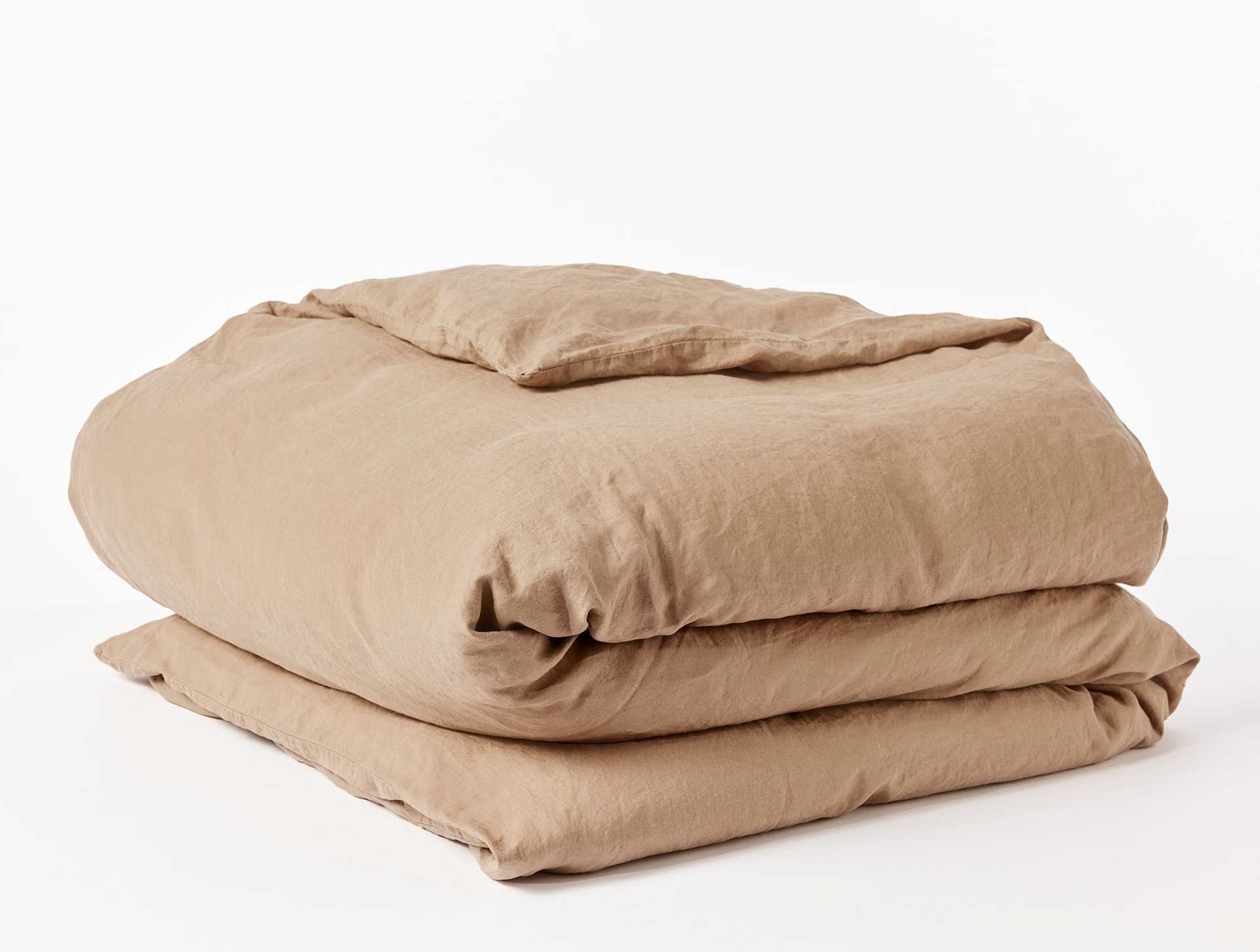
A duvet cover can protect the comforter from everyday contact and make routine laundering easier, but it does not replace the care directions for the comforter itself. The cover and the insert are separate textiles, and each may have different cleaning requirements.
Common assumptions worth reconsidering
- “Thicker means warmer.” Thickness can contribute to insulation, but fill type, fill quantity, chamber design and shell all matter. A lofty appearance does not tell the whole story.
- “Lightweight means flimsy.” A light comforter can be carefully constructed, with well-secured fill and durable materials. Weight and quality are not the same thing.
- “One warmth level works for everyone.” Sleep habits, room temperature and personal heat sensitivity vary. A comforter that feels cozy to one person may be too warm or too cool for another.
- “Breathable means cool in every circumstance.” Breathability can support comfort, but insulation still retains warmth. The combined bedding and the room environment shape the experience.
- “A construction label tells me everything.” Terms such as “box stitched” or “baffle box” describe aspects of design, not the complete warmth level. Read them alongside fill and shell specifications.
The takeaway: look inside the comforter
The most comfortable light comforter is not necessarily the thinnest or the puffiest. It is the one whose fill, quilting and shell work together to offer the warmth you want, in a form that feels right against your body. Fill affects how air is held; quilting helps control where that fill stays; and shell fabric shapes touch, drape and airflow.
When choosing among light comforters, look beyond surface thickness and marketing language. Compare the material, fill amount, construction, shell and care requirements, then consider how those details fit your room and your sleep habits. That thoughtful approach can make lightweight warmth feel less like a compromise and more like a comfortable, well-matched choice.